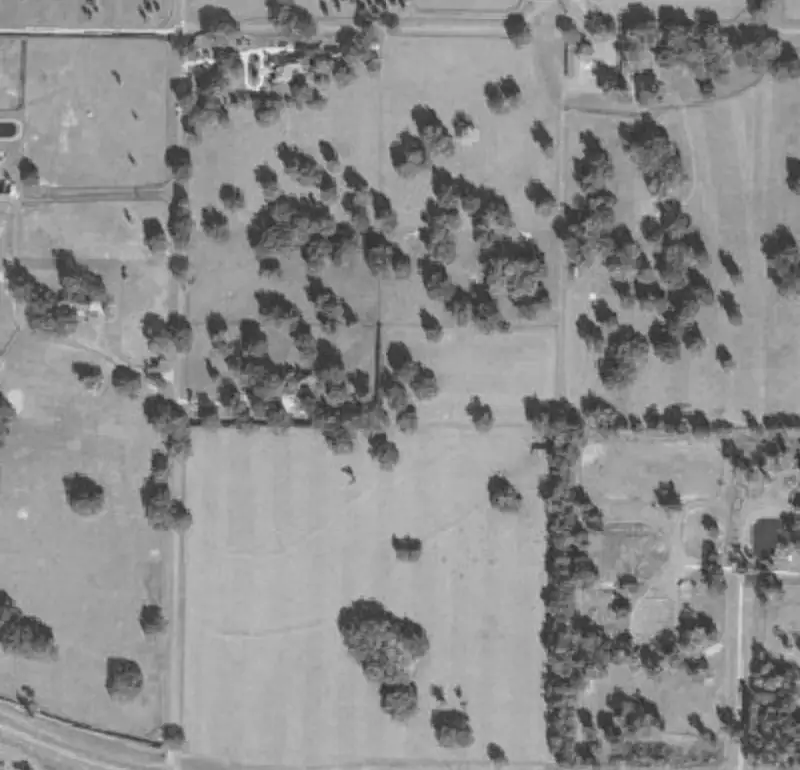
Why there is no single price for 10 acres
Ten acres sits in an awkward spot in the land market. It is too small to be a serious farm in most of the country and too large to be a simple house lot. Depending on where it is and what it allows, the same acreage can be bought by a family looking for a homestead, a hunter, a small builder planning a few lots, a neighbor expanding a farm, or an investor who wants to split it.
Each of those buyers pays a different price per acre, and the buyer that the parcel attracts decides the value more than the acreage does. A wooded 10 acres with paved frontage and power, 20 minutes from a growing town, sells into the homestead market. A landlocked 10 acres in a flood plain three hours from the nearest city sells, if it sells, to a neighbor at a price close to rural floor value.
So before you look at any number, ask who would actually buy this parcel and what they would do with it. That one question removes most of the confusion.
The rural floor from USDA averages
For a starting reference you can use the official farm land survey. The USDA NASS Land Values 2026 Summary, released July 31, 2026, puts the US cropland average at 6,020 USD per acre and the pasture average at 2,000 USD per acre.
As pure arithmetic, 10 acres at the national pasture average is 20,000 USD and 10 acres at the national cropland average is 60,200 USD. These numbers are a floor for rural land, not a price for your parcel. State and county figures vary widely (the 2026 report shows pasture at 650 USD per acre in New Mexico and 15,600 USD in New Jersey), and small tracts near towns usually sell well above farm values. For state tables and what drives them, see how much an acre of land is worth, and for local survey figures next to recorded sales, use the land value by county pages.
The size curve and why bigger tracts cost less per acre
Price per acre falls as acreage rises. This is one of the most consistent patterns in land sales, and it is the main reason you cannot multiply a lot price by ten.
The reasons are practical. A buyer of a 1 acre lot pays for one home site. A buyer of 10 acres also usually gets one home site, plus extra land that is worth less to them per acre. A buyer of 100 acres needs more capital, so there are fewer buyers, and fewer buyers means lower prices per unit.
Here is how that looks as arithmetic. Say recent sales in a county show 1 acre lots near 25,000 USD per acre, 5 acre tracts near 12,000 USD per acre, 20 acre tracts near 7,000 USD per acre and 80 acre tracts near 4,000 USD per acre. A 10 acre parcel falls between the 5 and 20 acre bands, so a reasonable starting point is somewhere around 9,000 to 10,000 USD per acre, or about 90,000 to 100,000 USD in total. Multiplying the 1 acre price by ten would give 250,000 USD, which is wildly wrong, and multiplying the 80 acre price by ten would give 40,000 USD, which is also wrong.
That is why good comparables come from a similar size band. LandPricer keeps comps between one third and three times the subject acreage (for 10 acres, roughly 3.3 to 30 acres) and adjusts within that band for size.
What moves the value of 10 acres
Once you have the right size band, these factors decide where in the range your parcel lands.
- Road access. Recorded legal access to a public road is essential. Paved frontage is worth more than a gravel easement, and no access can cut value dramatically.
- Utilities. Power at the road, public water or a feasible well, and soils that pass a perc test for septic. A buyer who has to bring power half a mile prices that cost in.
- Buildable area. Ten acres with three acres of usable high ground and seven acres of wetland or steep slope is effectively a three acre parcel for most buyers.
- Flood zone. Land inside a FEMA Special Flood Hazard Area is harder to build on and to finance.
- Zoning and subdivision potential. If local rules allow splitting 10 acres into two or more lots, an investor or builder may pay more than a homesteader. If minimum lot size is 10 acres, no split is possible.
- Shape and frontage. A long, narrow strip with little frontage is harder to use than a square parcel with wide frontage.
- Timber, water and views. Merchantable timber, a pond, a creek or a view can add value; so can good hunting cover in the right market.
- Location and growth. Commute distance, school district and the direction development is moving.
- Title and taxes. Back taxes, liens, unclear boundaries or a missing survey reduce what a buyer will pay until they are cleared.
LandPricer applies adjustments for time, size, access, flood, wetland share and utilities to every comparable before computing an estimate, so the number reflects these differences rather than ignoring them.
Raw land versus improved land
Raw land has no improvements: no driveway, no power, no well, no septic, sometimes no survey. Improved land has some or all of those in place. The difference matters more on 10 acres than on most sizes, because 10 acre buyers are often building a home.
Think about it as cost to the buyer. Say a raw 10 acre parcel needs a 500 foot driveway, a power extension, a well, a septic system and a boundary survey. Each of those has a local cost a buyer will look up or ask a contractor about. An improved parcel next door with all of that done should sell for roughly the raw value plus a large share of those costs, because the buyer saves money and months of work.
When you compare sales, make sure you compare raw to raw and improved to improved, or adjust explicitly for the difference. A sale that included a house, a barn or a mobile home is not a land comparable at all and should be dropped.
Step by step to value a 10 acre parcel
This is the process to use whether you own the land, plan to buy it, or want to price it for a quick sale.
- Confirm the parcel. Get the APN, the recorded acreage, the boundary map and the owner of record from county records. The APN lookup gives you this in one view.
- Check access and constraints. Look for road frontage or a recorded easement, the flood zone, mapped wetlands, slope and zoning.
- Find comparable sales. Use vacant land sales from the same county first, roughly 3 to 30 acres, in the last 24 months (36 if sales are thin). Our land comps tool shows each sale with its source.
- Adjust each comp. Correct for size, time, access, utilities, flood and wetland share relative to your parcel.
- Take the middle. Use the median or weighted median of the adjusted price per acre, not the average of the highest asking prices you can find.
- Multiply and set a range. Multiply by 10 acres and keep the spread between the lower and upper adjusted values as your range.
- Sanity check. Compare the result with the county USDA value as a floor and with current asking prices as a ceiling. Listings tell you what sellers hope for; sales tell you what buyers paid.
Here is the final step as arithmetic. Say six adjusted comps give 8,100, 8,600, 9,000, 9,400, 9,900 and 12,800 USD per acre. The median sits between 9,000 and 9,400, so about 9,200 USD per acre. Ten acres gives about 92,000 USD, with a working range of roughly 86,000 to 99,000 USD from the middle four comps. The 12,800 USD sale deserves a closer look before you rely on it.
Using the value to buy or sell
If you are selling, the estimate tells you what a well informed buyer is likely to pay, and the range tells you how much room there is above it. Price far above the top of the range and the parcel tends to sit. If you need a fast cash sale, expect investors to offer well under market value, because they carry the holding and resale costs.
If you are buying to resell, market value is only the start. Your offer has to leave room for closing costs, holding costs, selling costs and profit. The land value calculator gives you the market value, and the flipping math is covered in how to flip land.
If the value is going to be used for a loan, an estate, a tax filing or a court case, you need a licensed appraiser, not an estimate. We explain the difference in land appraisal vs land valuation.
Is 10 acres worth ten times the price of 1 acre
Almost never. Price per acre falls as size rises, so 10 acres usually sells for much less than ten times the price of a 1 acre lot in the same area.
What makes 10 acres hard to price
Ten acre parcels attract very different buyers, from homesteaders to farmers to small builders, and fewer of them sell in any one county than small lots. That means fewer comps and wider ranges, especially in states where sale prices are not public.
Can I split 10 acres to increase value
Sometimes. It depends on zoning, minimum lot size, road frontage requirements, septic approval and local subdivision rules. Check with the county planning office before you pay a premium for split potential.